Source: NOAA Virtual Nightfire Rory Hodgeson – On Our Radar:
Nigeria’s oil production almost halved from 2012 to 2022. During this period, the flaring intensity barely changed. The volume of gas flared declined broadly in proportion to oil production, falling 45 percent, from 9.6 to 5.3 billion cubic meters (Figure 8). There were 174 individual flare sites in the most recent flare count, conducted in 2022. – World Bank
•To reverse this industrial waste of flaring, and its detrimental environmental footprint, oil and gas companies, countries and international organizations have adopted Flare Gas Recovery Systems (FGRS) for economic, environment and compliance ends.
•Recently, many flare gas recovery projects in the world have been mostly motivated by environmental stewardship mainly spear headed by international organisations like the World Bank’s GGFR partnership and the Global Methane Initiative (GMI) with oil and gas companies and petroleum producing countries as signatories .
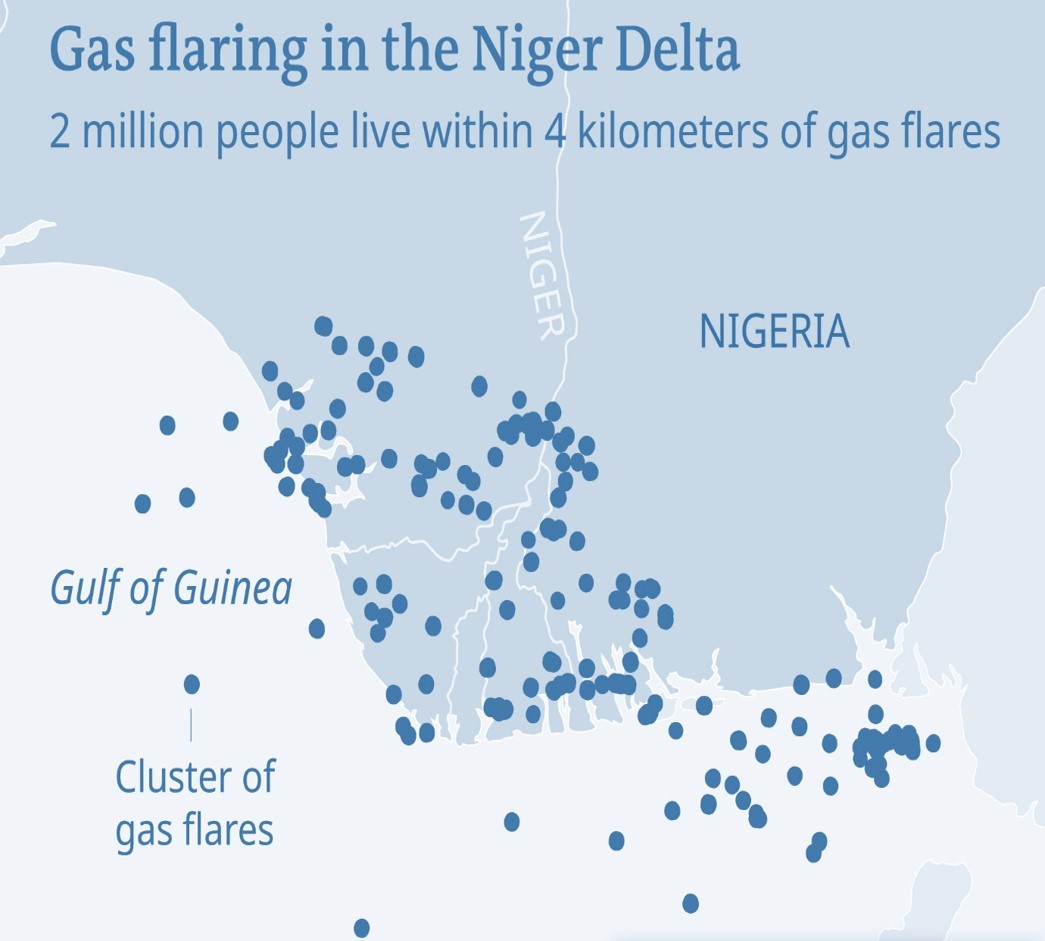
•The figure on the right shows that most of the gas flaring in Nigeria occurs in the Niger Delta affecting about 2 million people living closer than 4km to gas flares.
•Flare gas commonly contains about 60% up to 90% methane (CH4), which supports the feasibility of establishing a methanol (CH3OH) synthesis plant.
•This study considers the development of a PetroChemical Facility & methanol processing facility. It offers complimentary capacity to planned and existing petrochemicals projects in Nigeria, which include Eleme, Brass, and Indorama.